Bill Haskell
|
|
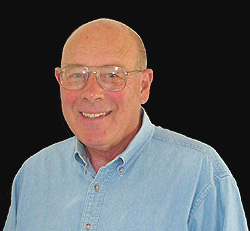
Bill Haskell |
Since his early years, Bill has had a keen interest in creative expression. He has pursued that interest in many mediums, including silver jewelry and metal sculpture, but mainly in wood. His first encounter with woodturning was in Junior High wood shop, where a few bowls were turned using terrible tools with no instruction. However, this woodturning experience intrigued him and in 1989, a latent interest in woodturning was rekindled after he bought an old secondhand Dunlap lathe from a friend. Since that time, Bill has become an avid and active woodturner. He feels challenged in a new and exciting way by the artistic and technical avenues into which this medium has expanded. Artistic expression in turned wood has exploded in the last 25 years, and Bill is enthusiastically a part of this creative direction.
Bill is largely self-taught, but he has attended numerous woodturning symposiums and demonstration classes over the years. At these demonstrations, renown professional and inter-national turners teach their techniques and woodturning principles, as well as design concepts. These have been an invaluable educational source for Bill.
Mentoring numerous turners in his workshop, demonstrating woodturning techniques to various chapters and other venues, and exhibiting at local art shows and in several galleries are some of the woodturning activities in which Bill has been involved. The Home & Garden Channel (HGTV) filmed him on the lathe and performing the biomorphic piercing work he incorporates into some of his pieces.
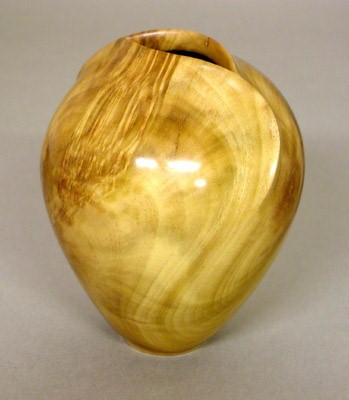
Natural elements found in timber (some might say imperfections) are often used to advantage by Bill in his work. Such features as bark inclusions, unusual figure, distressed areas, spalting (which is the initial stage of decomposition), natural edges, and sapwood/heartwood color contrast are often employed to achieve striking and unusual character in combination with complementary form.
In his turning, Bill seeks to explore form composition in turned objects, often with woods that offer rich figure, color, and unusual character. While finished wood is a warm, sensuous, inviting, and tactile material, creating a beautiful form in each piece is a primary objective. His ultimate goal is to create an appealing shape that is complementary with the distinctive quality of the wood used in each one-of-a-kind studio piece.
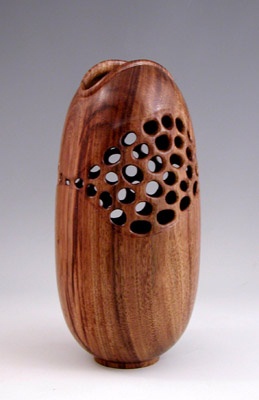
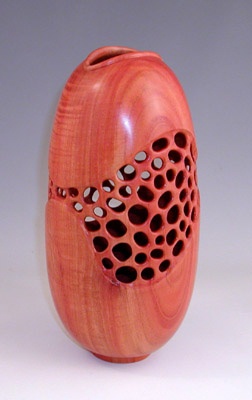
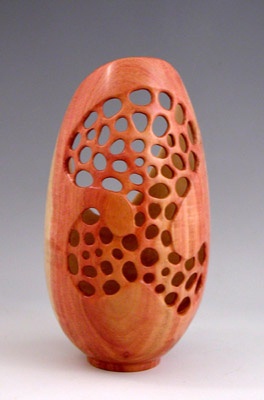
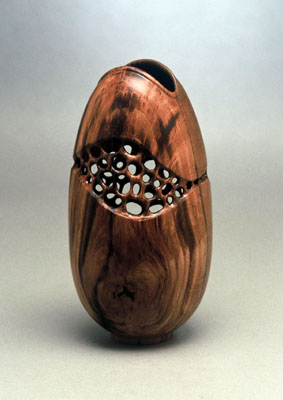
In more recent years, Bill has used carved and/or pierced designs to enhance his pieces after the lathe work is complete. In most of these cases, a less dramatic wood is used to minimize competition between the natural character of the wood and the carved or pierced design.
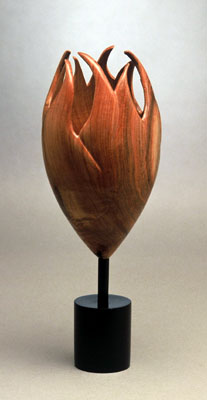
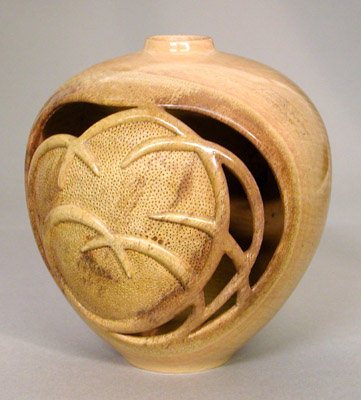
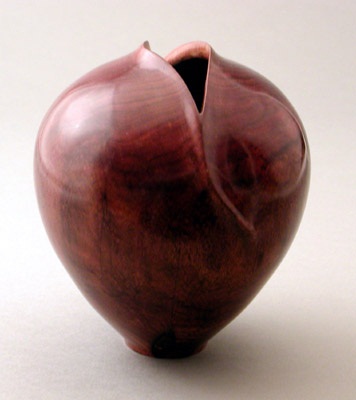
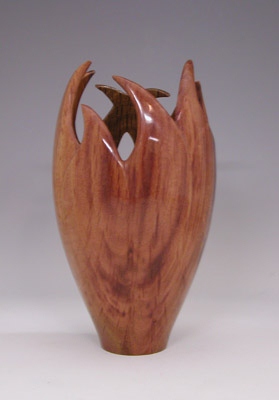
Examples of his carved and pierced work can be found in his vessels with tuxedo and seed pod openings, as well as in his coral series and flowing ribbon carved vessels.
Click on any of the small pictures below to view a full sized image. (not all images have larger views)

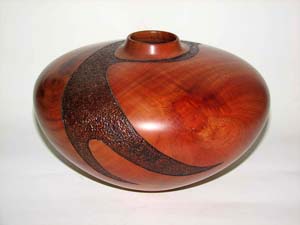 Carob November 2011 |
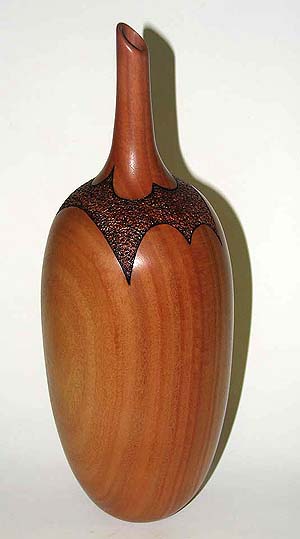 Iron Bark Eucalyptus November 2011 |
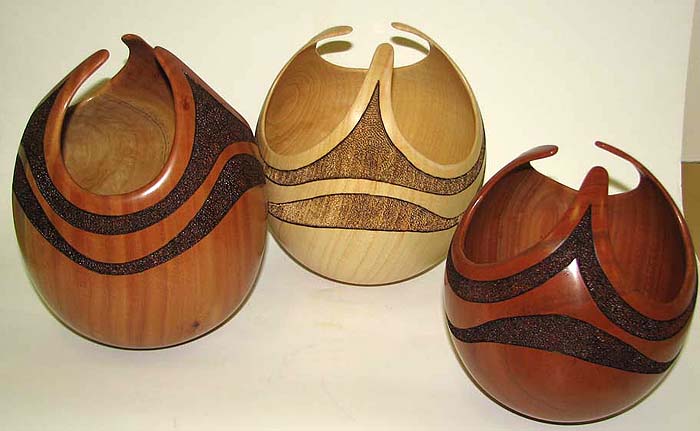 Ash, Red Gum Eucalyptus June 2011 |
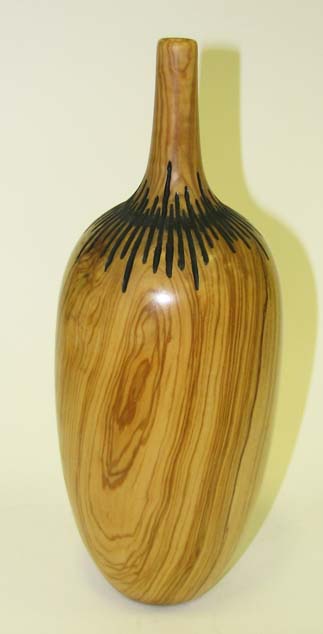 Olive April 2011 |
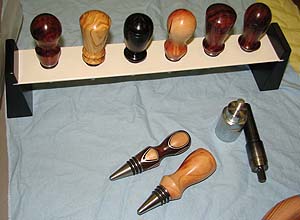 Cocobolo, Manzanita & Ebony June 2011 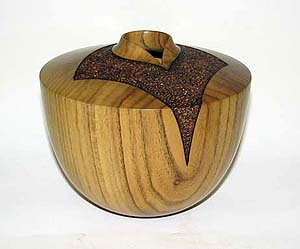 Black Locust November 2011 |
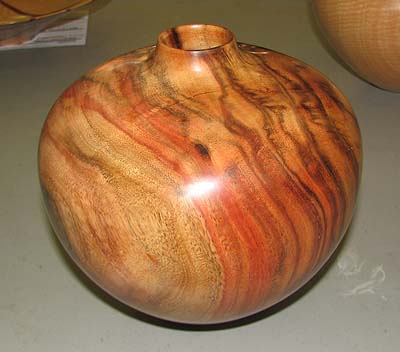 Carob March 2011 |
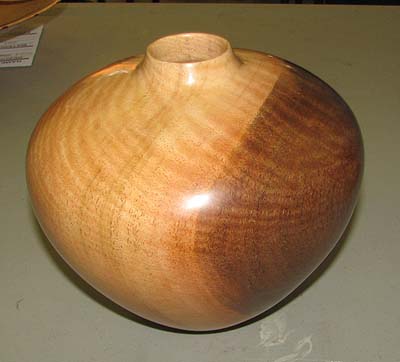 Carob Burl March 2011 |
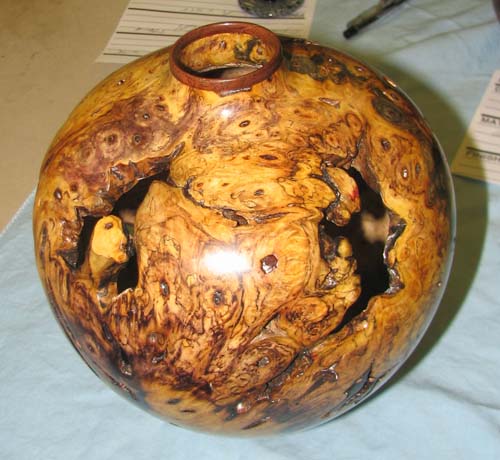 Spalted California Buckeye & Black Walnut - Contest Winner February 2011 |
 Spalted Maple February 2011 |
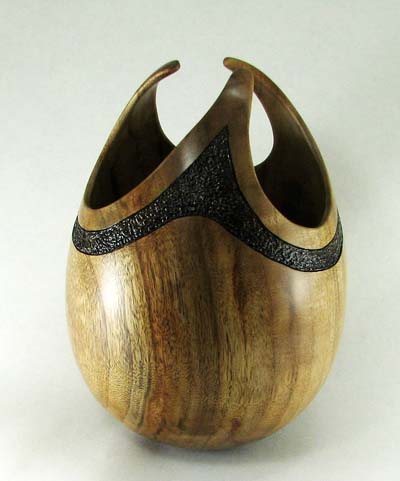 November 2010 |
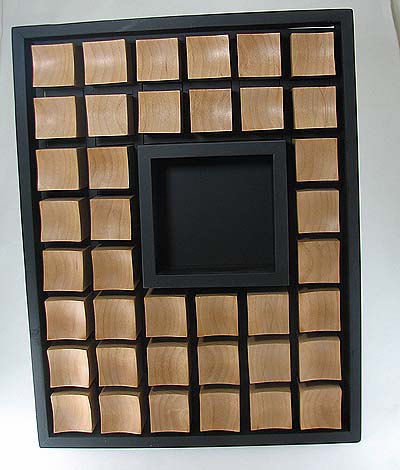 November 2010 |
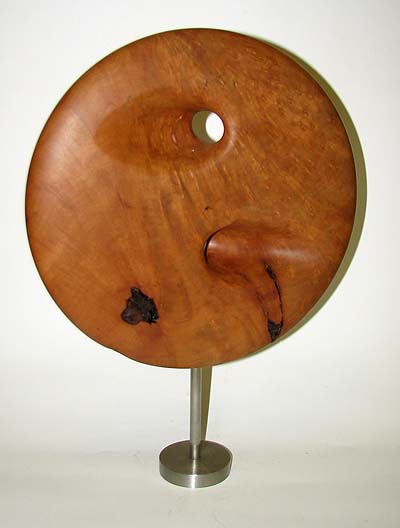 Madrone Burl October 10 |
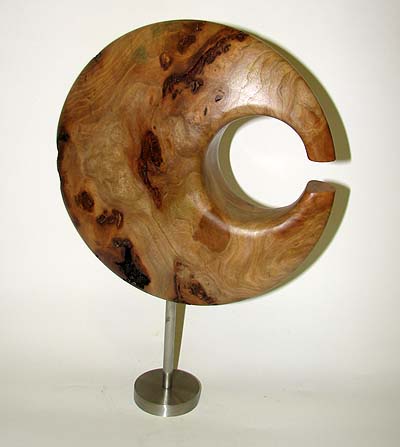 Elm Burl October 10 |
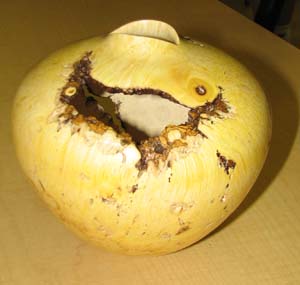 Box Elder Burl September 10 |
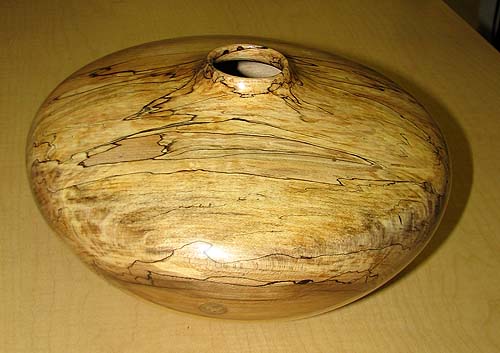 Spalted Maple September 10 |
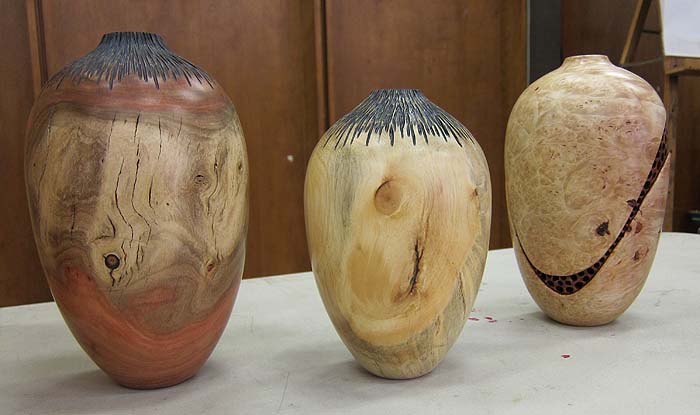 Carob, Ponderosa Pine, Big Leaf Maple June 10 |
 Red Gum Eucalyptus February 10 |
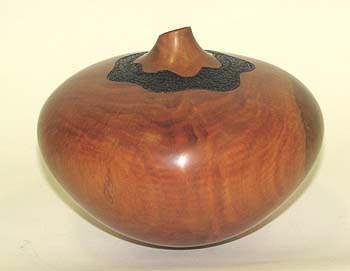 Red Gum Eucalyptus October 09 |
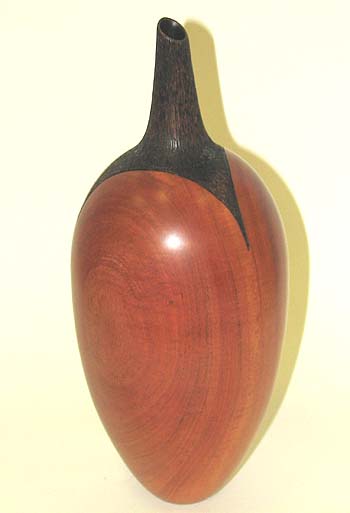 Carob October 09 |
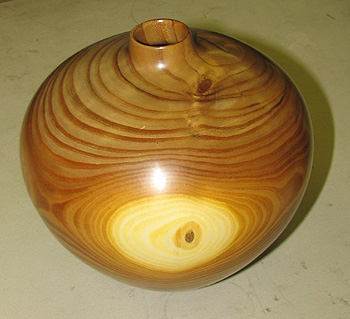 Russian Olive September 09 |
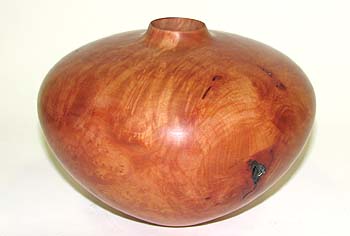 Madrone Burl August 09 |
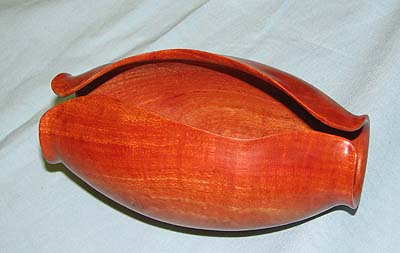 Carob August 09 |
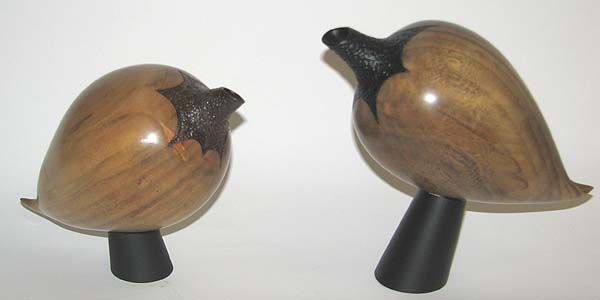 Camphor (Hollow) Pods July 09 |
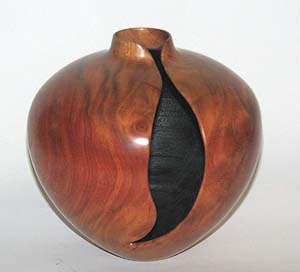 Carob July 09 |
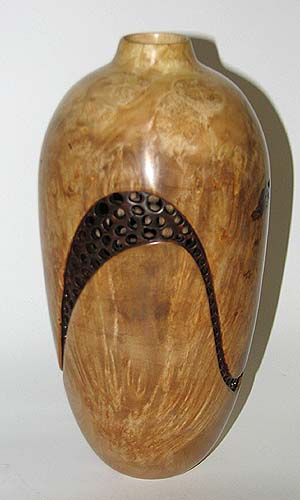 Big Leaf Western Maple Burl July 09 |
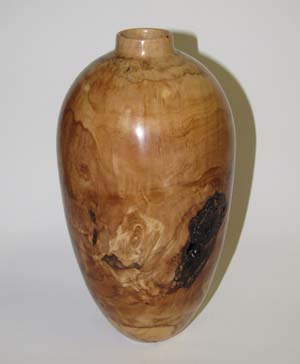 Olive May 09 |
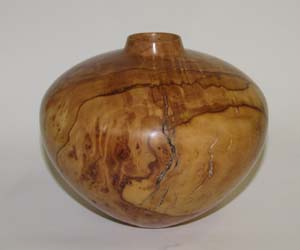 Olive May 09 |
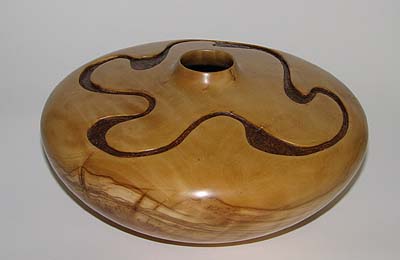 Olive October 08 |
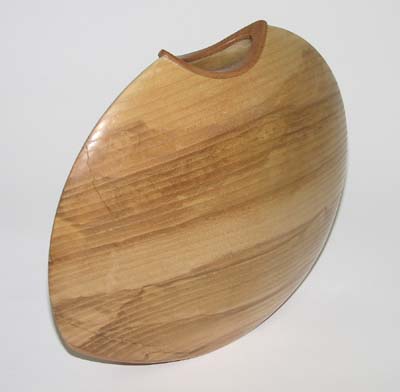 Ash & Cherry October 08 |
 |
 |
 |
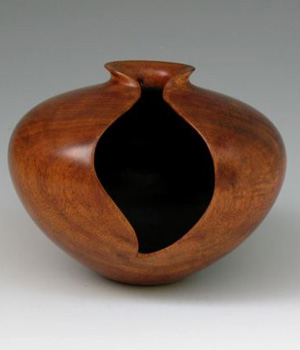
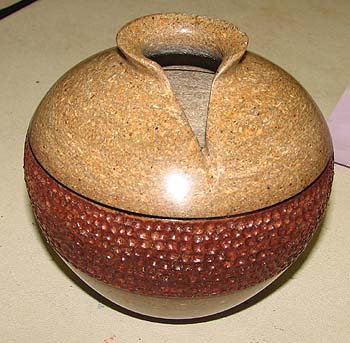 Trex hollow vessel Aug 08 |
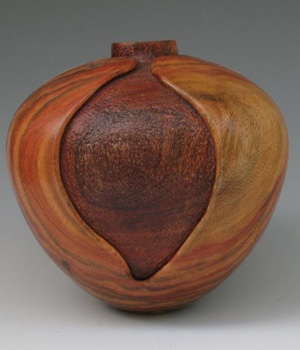
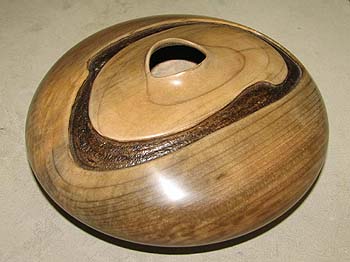 Magnolia hollow vessel Aug 08 |
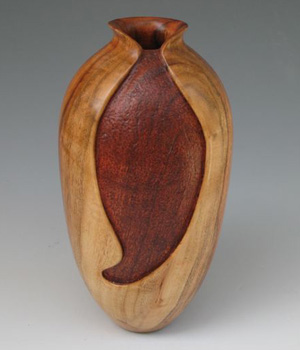
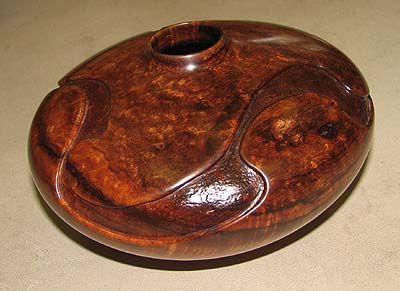 Koa hollow vessel Aug 08 |
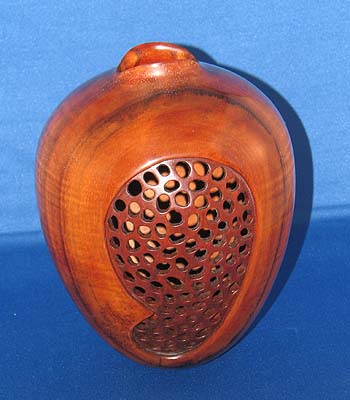 Koa June 08 |
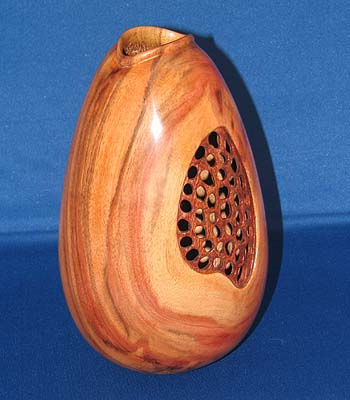 Carob June 08 |
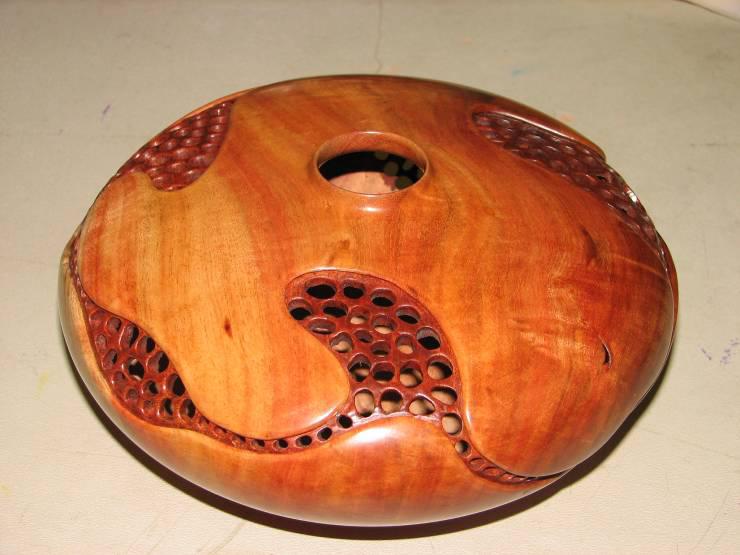 October 07 Carob |
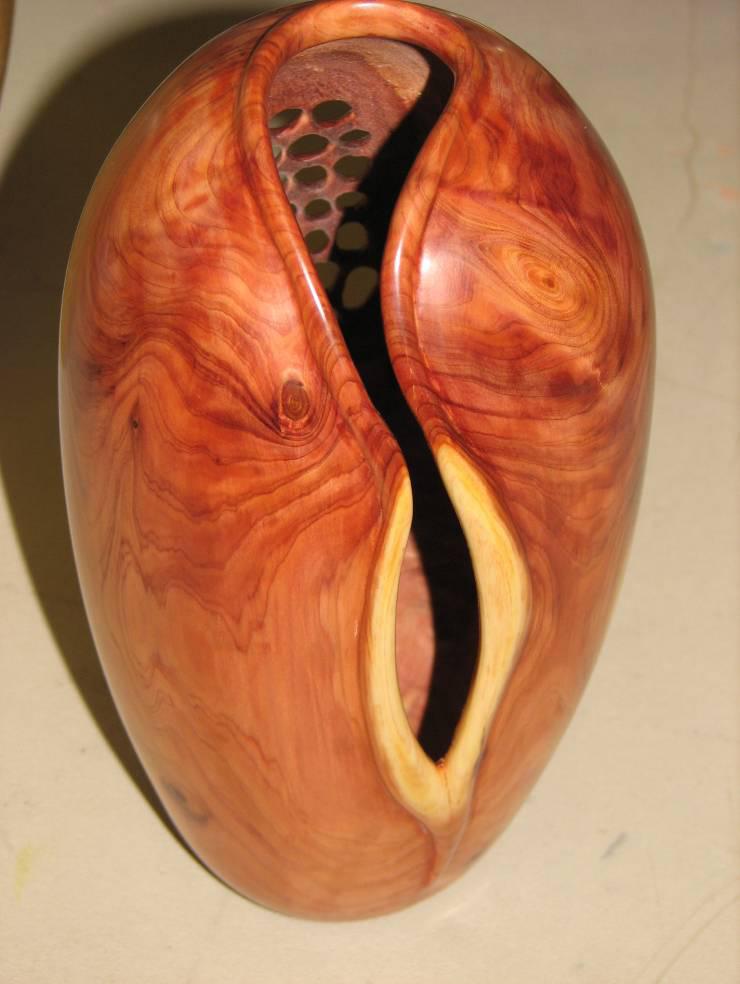 October 07 Juniper |
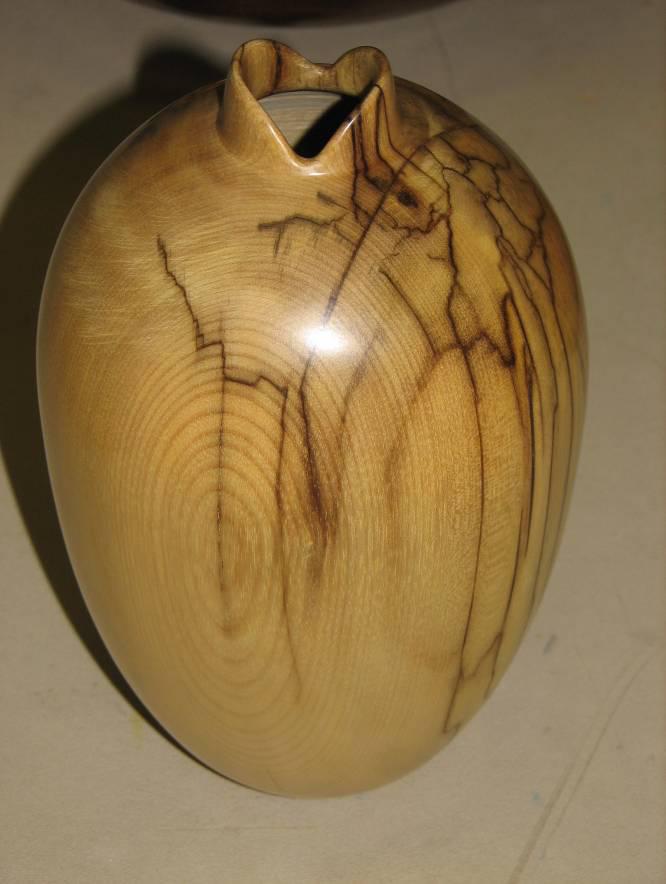 October 07 Myrtle |
|
|
|
 |
|
|
|
|
|
|
|
|
|
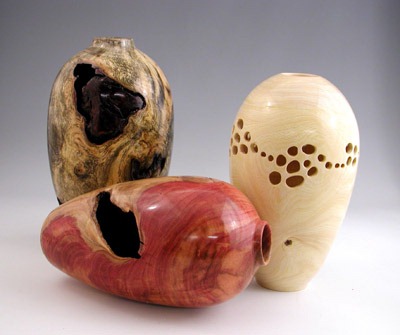
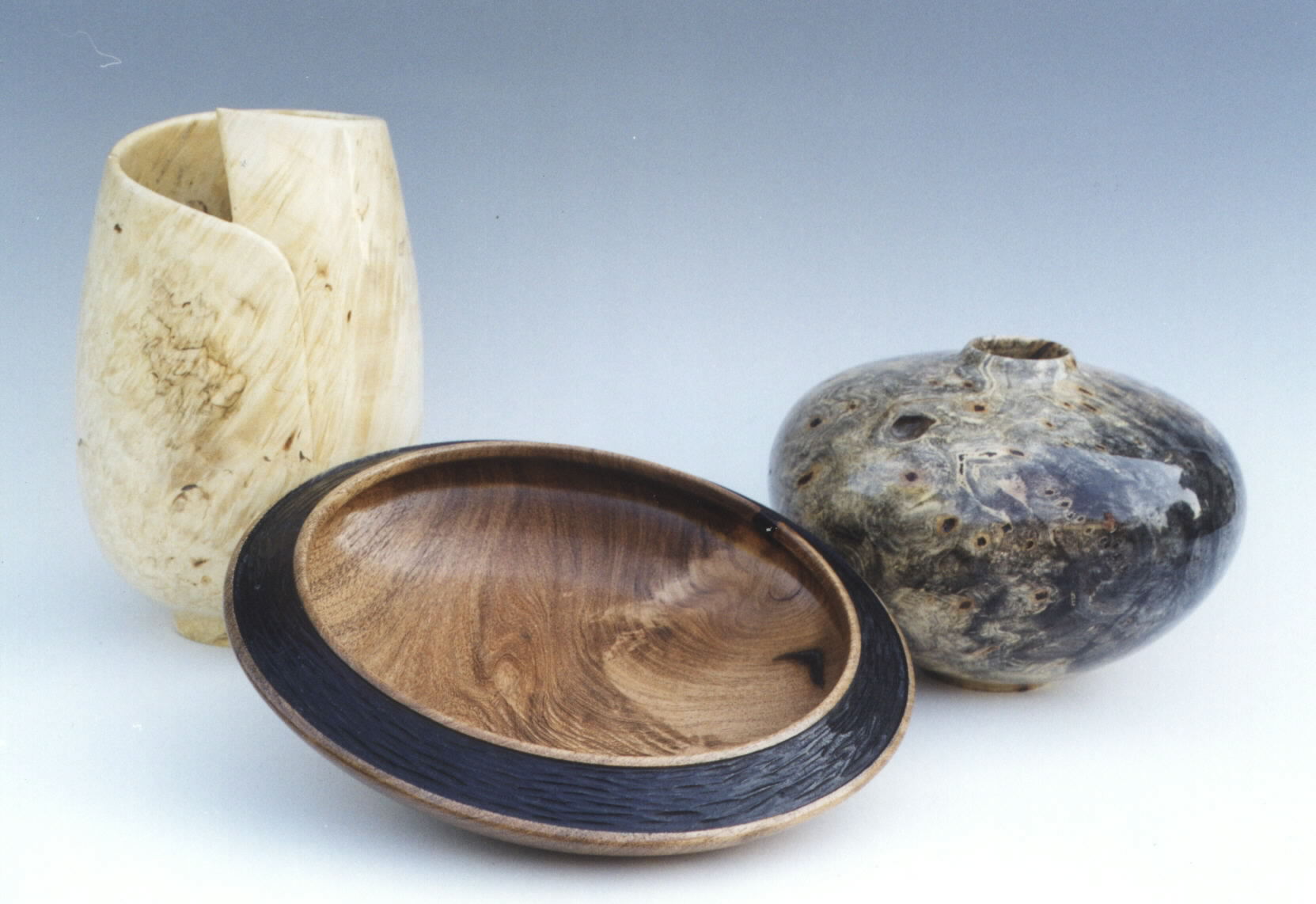 The piece on the left is a box elder vessel with carved rim and overlapping front, the center piece is a mesquite bowl with enclosed rim with carved textured ebonized band, and the piece on the right is a California buckeye burl hollow form. |
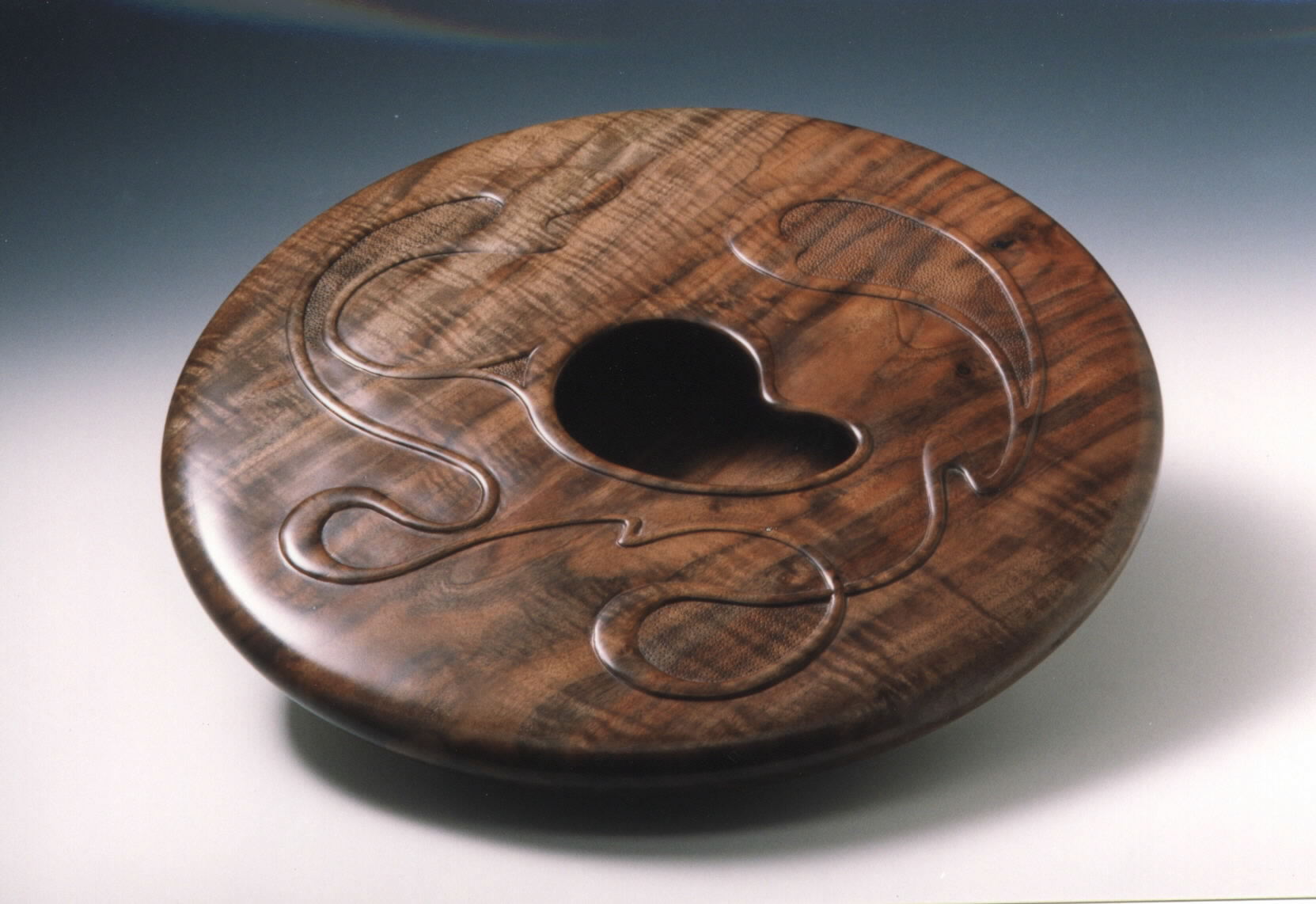
Large low hollow form done in claro walnut with a free-form design carved on the top surface |
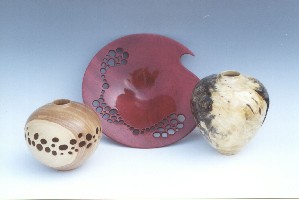
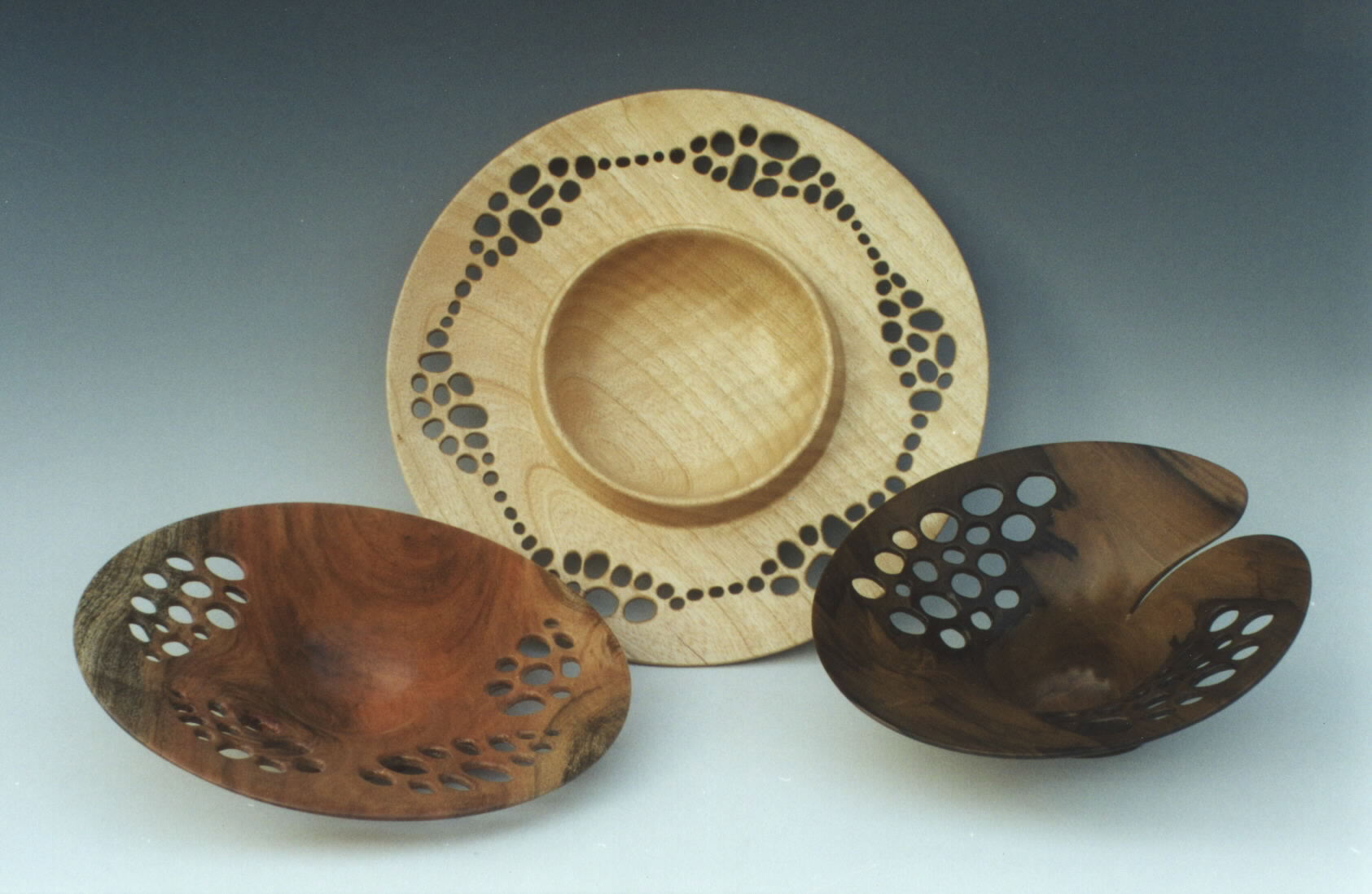
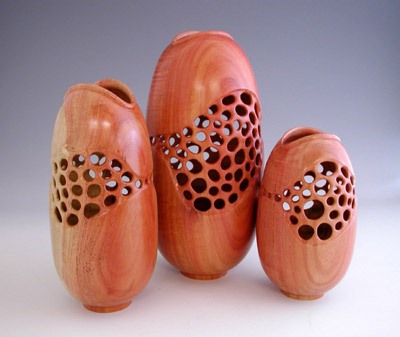
Two of the three pieces are an example of the pierce pebble mosaic
patterns I carve to give the piece a unique dynamic quality. The
piece on the left is a mountain ash hollow form, the center piece is a
purple heart fountain plate form with carved free-form rim, and the
right-hand piece is California buckeye burl hollow form.
|
The turned pieces shown here were turned on my OneWay lathe. I usually start with a log or turning blank mounted between centers. After a tenon is formed on one end, the tenon is inserted in the four-jaw chuck. The outside shape is formed, sanded, and finished before hollowing the inside.
After the piece has been turned and sanded and while still on the lathe, I apply a CA sealer coat (thin viscosity cyanoacrylate, commonly known as Hot Stuff or Super Glue) to the outside, and sand it with 220 and 320 grit sandpaper. In addition to providing better color and detail definition, the CA finish has the benefit of giving strength to a thin walled vessel. Sanding is done initially with the lathe on, and then finally with the lathe off.
I typically use spray can lacquer as a finish, applying numerous coats. After 6-10 coats, I wet sand using mineral spirits, with foam backed 320 grit wet/dry paper.
Certain pieces where I desire a high degree of color and detail fidelity, which an oil
based finish tends to underachieve; I will initially apply one coat of CA (thin
viscosity cyanoacrylate, commonly known as Hot Stuff or Super Glue).
In addition to providing better color and detail definition, the CA
finish has the benefit of giving strength to a thin walled vessel.
The CA coat is then sanded out (220, 320, and 00 steel wool) and buffed
to remove the scratches. I then
apply several coats of spray lacquer.
click
here to read about CA finishes
last updated 01/20/2012