 |
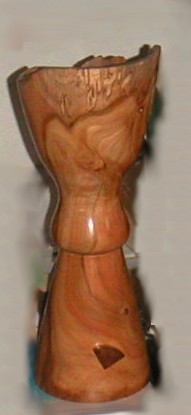
Eucalyptus lamp, finished in lacquer, contains a CFL, the triangular object is the on/off switch - it is hollowed from both ends |
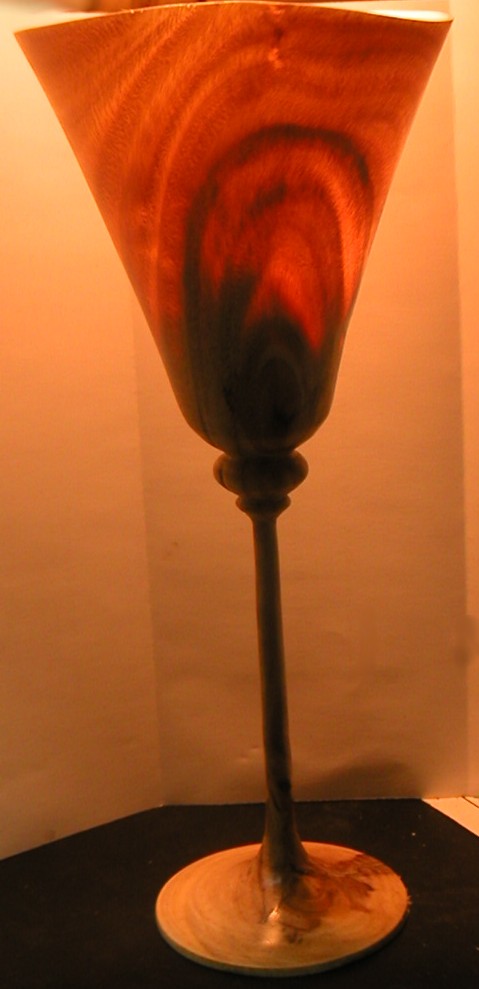 |
Goblet turned in a single pass from freshly cut eucalyptus. Turned
until light shone uniformly through the top part, finished in lacquer - distortions are what eucalyptus does when it dries |
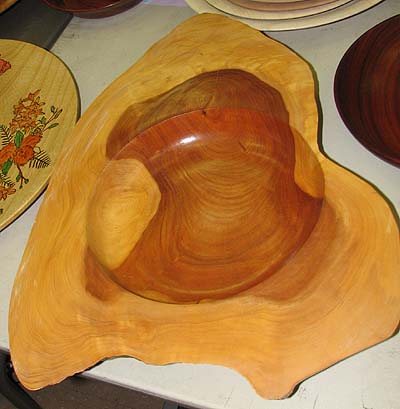
Monterey Cypress
September 08
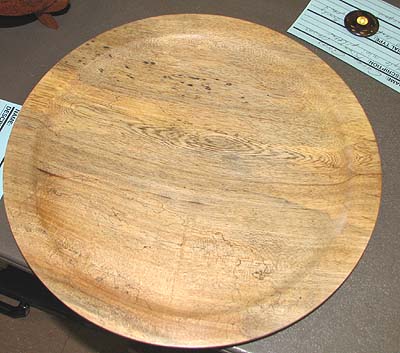
Ficus
September 08
tools - bowl gouge, skew, parting tool
Finish - as specified for each piece.
Contact - 
Web site - http://www.wbnoble.com
3 in diameter burl wood bowl, oil finish
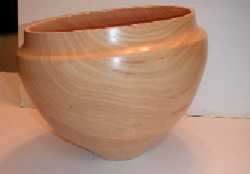
If you compare these photos to the others in the gallery you can see the difference that a good camera can make. The really bad pictures were taken with a Kodak DC20 digital camera - as you can see, the camera cannot handle contrast very well, has a very shallow depth of field, and it picks up the 60 Hz from fluorescent lights (photo at left). But, it's what I had. Background is conductive foam plastic from some electronics packaging.
The better quality pictures were taken with a Minolta DiMAGE X. The improvement in quality is quite striking. For example, compare the two images below.
Lemon wood base and finial, sycamore root ball with lacquer finish.7 inches high. (photo taken with the DC-20, note focus and resolution problems - this is as good as that camera gets)
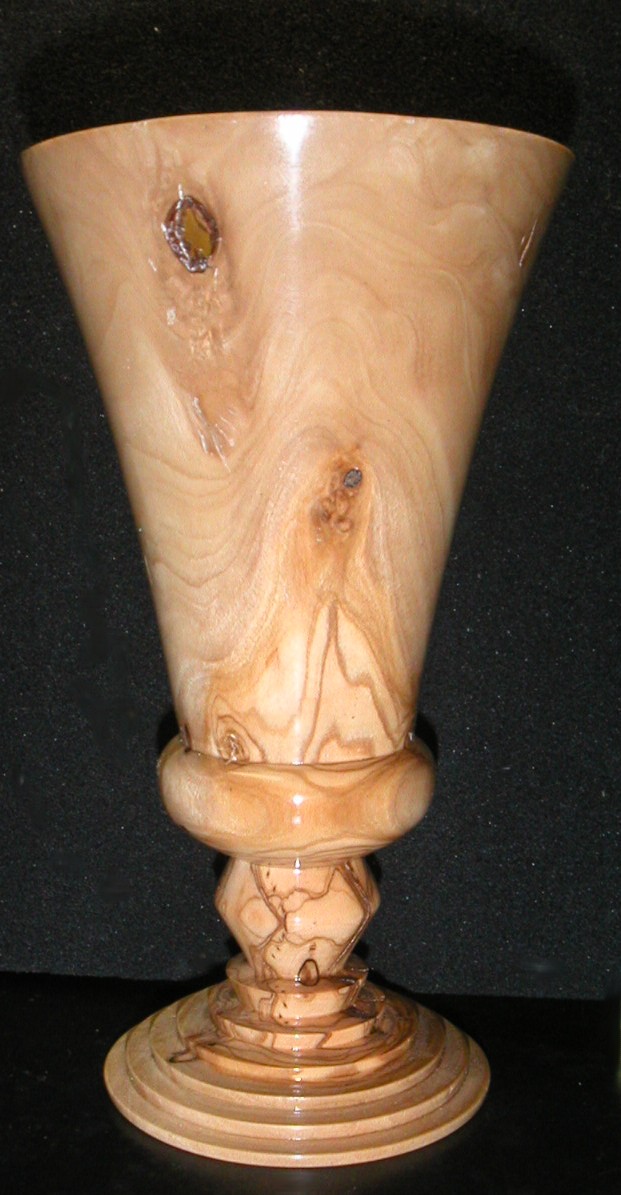
Olive wood vase, 6.5 inches high, finished in lacquer Click image to enlarge
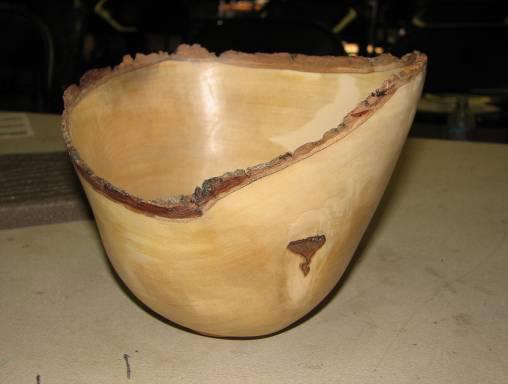
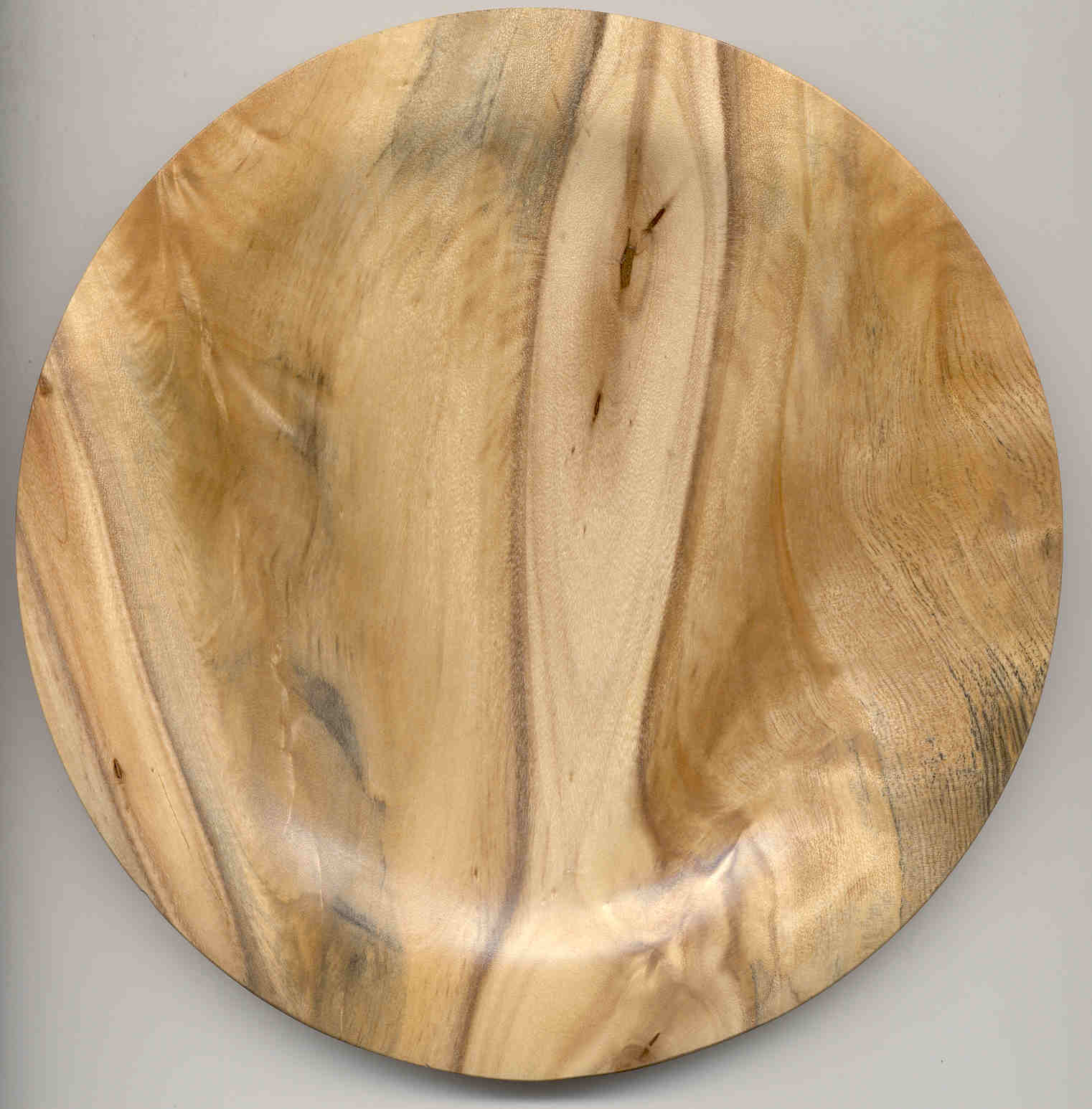
Ficus 13 " diameter - sold at Brand Library "From Wood to Treasure" show
Cypress (about 18 inches) from near San Luis Obispo (not for sale)
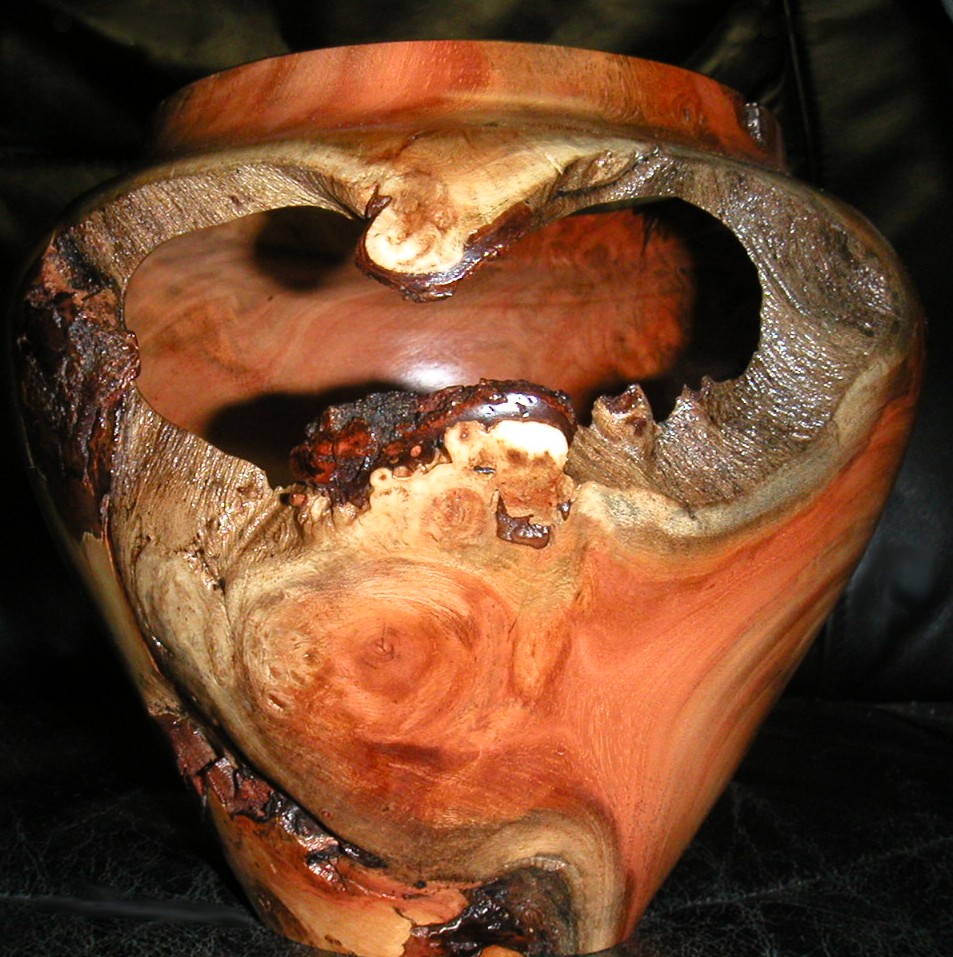
click image to enlarge (Sold)
I called this my Owl bowl - its less apparent in the picture than when you hold it in your hands, but it really has the face of an owl. This was from the crotch of a branch from a fairly large tree. Wall thickness is about 1/2 inch. The color is the natural color of the carob wood.
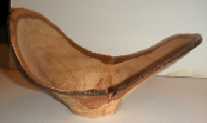
Oak, turned very wet, note warping - also note that this is from a "Y" and includes three (count them, THREE" piths that did not split - the trick - turn it thin in a single setting and then stop and leave it alone.

Click image to enlarge
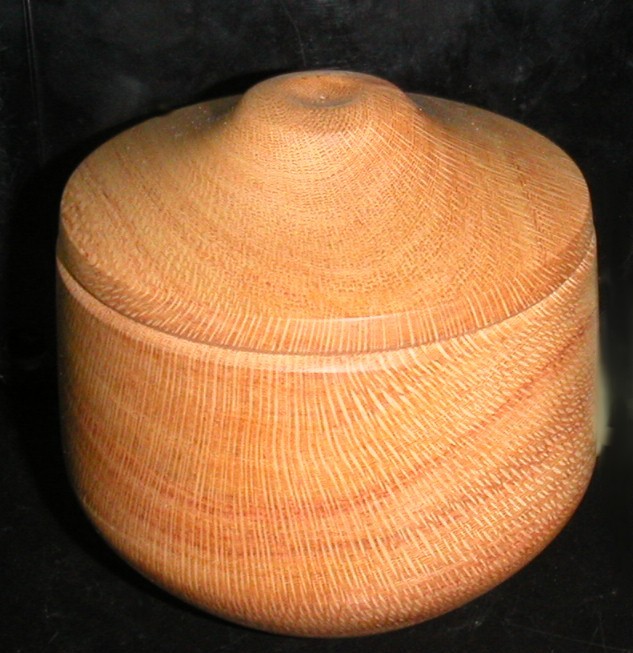
Silky Oak (from Australia), 4 inches diameter, oil and wax finish. . This wood turns nicely and looks good, but I had a rather severe reaction to the dust from this wood, I won't be turning any more of it. Beware of this family of wood unless you are almost totally immune to poison oak/ivy/sumac.